



- Boarding School Experience
Is a boarding school the right decision for busy working and travelling parents?
 July 08, 2026

 Dr Craig Cook
 November 16, 2026
 7 min read
Help others discover this content
Key Takeaways
Families choose a British international school for three main reasons: an internationally recognised curriculum, a teaching style that builds confident and independent learners, and a strong tradition of pastoral care and character education. In India, most British international schools follow the Cambridge curriculum, leading to Cambridge IGCSE and A Level.
For many parents in cities such as Gurugram, the question is no longer whether an international education is worth considering, but which kind. Yet 'British' can mean very different things from one school to the next. This guide explains what a British education can involve and how to assess a school’s British connections and educational provision.
A British international school is a school outside the United Kingdom that follows a British curriculum and is shaped by British educational practice. In India, many British international schools offer Cambridge programmes delivered by Cambridge International Education, part of the University of Cambridge.
Most British schools are organised in four stages:
The curriculum is only part of the picture. What distinguishes a British education is the culture around it: how teachers teach, how students are cared for and how a school helps young people grow into confident, responsible adults.
Parents choose British international schools for recognised qualifications, a teaching style built on depth and discussion, and a culture of care and character. Six reasons stand out.
1. A curriculum recognised around the world
Cambridge qualifications are taken in more than 160 countries and accepted by universities across India, the United Kingdom, the United States, Canada and Australia. These qualifications can offer a range of pathways, whether a child eventually studies at home or abroad.
2. Depth over memorisation
A British education asks students to understand a subject, not simply remember it. Lessons build knowledge carefully, then ask children to apply, explain and question it. Assessment rewards reasoning as well as recall.
3. Confident speakers and independent thinkers
British classrooms place a strong emphasis on oracy: speaking clearly, listening well and building an argument. From the early years, children discuss ideas, ask questions and present their thinking.
4. Character, community and the House system
Many British schools have House systems, smaller communities that mix students of different ages. Houses can help children develop a sense of belonging and chances to compete, lead and support one another. Read more in our guide to the school House system.
5. Pastoral care at the centre
In a British school, safeguarding is everyone’s responsibility. Tutors, Heads of Year, counsellors and safeguarding leads work together to support students’ wellbeing and identify those who may need additional help.
6. Continuity for globally mobile families
Since the British curriculum is taught worldwide, children who move between countries can continue their education with greater curricular continuity, although transitions will still depend on the schools and courses involved. This suits expatriate families, returning non-resident Indian (NRI) families and parents whose careers may take them overseas.
The difference between a British international school and a national board school lies in emphasis rather than quality. India’s national boards, CBSE and CICSE, serve millions of students well. A British curriculum offers a more international outlook, wider subject choice at IGCSE and A Level, and a teaching style centred on enquiry and independent learning.
|
|
British international school |
National board school |
|
Curriculum |
British, usually Cambridge in India |
CBSE or CICSE |
|
Qualifications |
Cambridge IGCSE and A Level |
CBSE, ICSE or ISC board examinations |
|
Recognition |
Indian and international universities |
Indian universities, increasingly international |
|
Teaching style |
Enquiry, discussion, independent learning |
Structured, syllabus-led |
|
Subject choice |
Wide choice at IGCSE and A Level |
Defined streams in senior years |
Choose a British international school by checking for a genuine British connection, recognised standards, strong pastoral care and a full life beyond lessons. When comparing British schools in India, ask:
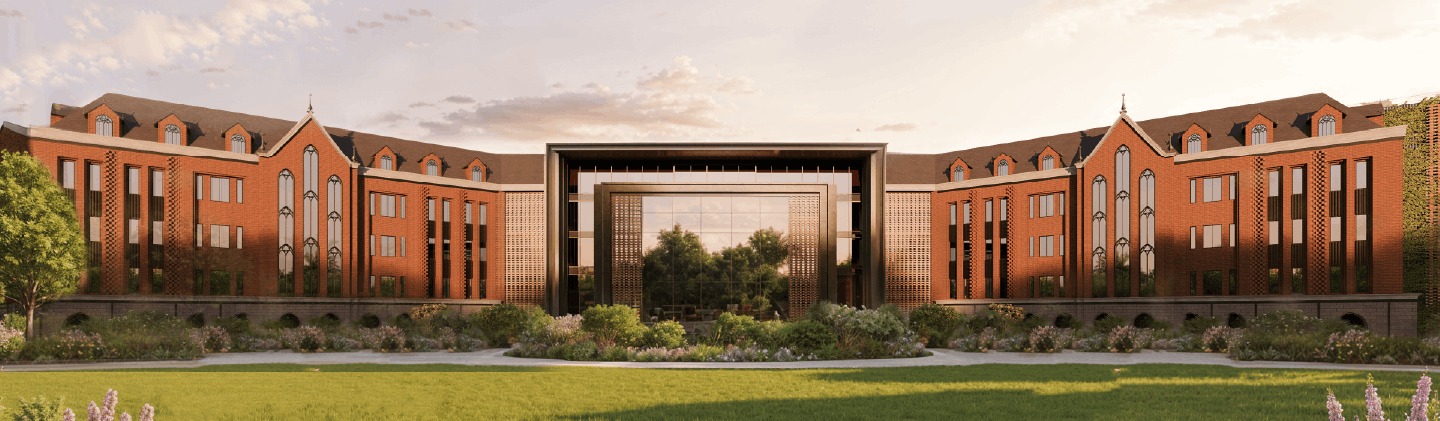
Queen Elizabeth’s School, Gurugram is a British international day and boarding school inspired by its founding school, Queen Elizabeth’s School, Barnet, which was incorporated by royal charter in 1573. In 2026, QE Barnet was named The Sunday Times State Secondary School of the Year.
QE Gurugram has been awarded Provisional School status by the Council of British International Schools (COBIS). The school follows the Cambridge curriculum from EY1 (Nursery) to Year 10 (Grade 9), with A Levels to follow when the Sixth Form opens in August 2029.
Every student belongs to a QE House from their first day, takes part in QE Flourish across Care, Create, Challenge and Compete, and has Personal Development Time every week.
Day, weekly and full boarding is available from Year 5 (Grade 4).
A British international school offers a recognised academic pathway, a teaching style built on curiosity and confidence, and a culture that takes character and care as seriously as results. The surest way to judge whether it suits your child is to see it in action.
Admissions are open for 2027–28 from Nursery (EY1) to Year 10 (Grade 9). To visit the campus, enquire online or call +91 921 702 4848.
Key Takeaways
Help others discover this content
July 08, 2026

August 20, 2026

September 02, 2026
A British international school is a school outside the United Kingdom that follows a British curriculum and British educational practice. In India, most British international schools follow the Cambridge curriculum, leading to Cambridge IGCSE at the end of Year 11 (Grade 10) and A Level at the end of Year 13 (Grade 12).
Yes. Cambridge IGCSE and A Level qualifications are recognised by Indian universities and by the Association of Indian Universities, as well as by universities in more than 160 countries, including the United Kingdom, the United States, Canada and Australia.
A British curriculum emphasises enquiry, discussion and independent learning and offers wide subject choice at IGCSE and A Level. CBSE follows India’s national curriculum framework and leads to CBSE board examinations. Both are respected; the right choice depends on your child’s future plans.
No. British international schools welcome Indian and international families alike. Many Indian families choose them for the teaching style, the breadth of opportunity and the flexibility that internationally recognised qualifications offer.
The Council of British International Schools (COBIS) is a membership association for British international schools worldwide. Membership indicates that a school has been assessed against recognised standards of quality, safeguarding, and governance.
Fees vary widely between schools. Compare what is included, such as meals, transport, enrichment and boarding, rather than tuition alone. Many British schools also offer scholarships for academic, sporting or creative talent.
Children can join from Nursery (EY1) at age 3. Year group placement is based on a child’s age on 31 August. Admissions for 2027–28 are open from Nursery (EY1) to Year 10 (Grade 9).
Yes. Queen Elizabeth’s School, Gurugram offers day boarding, weekly boarding and full boarding, with boarding available from Year 5 (Grade 4).
Discover more insights and stories from Queen Elizabeth's School
boarding school experience
Choosing the right school for your child involves more than comparing academic results or curriculum options. The environment in which a child learns, builds relationships and develops independence can shape their experience of school just as significantly.
Dr Craig Cook September 02, 2026 7 min read
 university & career readiness
Education in India is changing. While academic excellence continues to matter, parents today are increasingly looking beyond examination results, seeking an education that equips their children with relevant 21st– century skills.
Dr Craig Cook August 27, 2026 8 min read
boarding school experience
Ask a parent who has never considered boarding what comes to mind, and the answers are often decades out of date: strict discipline, cold dormitories, a child sent away. Ask a parent who has actually researched the best boarding schools in India today, and the picture looks nothing like that.
Dr Craig Cook August 20, 2026 5 min read