


- Boarding School Experience
Is a boarding school the right decision for busy working and travelling parents?
 July 08, 2026

 Dr Craig Cook
 August 20, 2026
 5 min read
Help others discover this content
Key Takeaways
Ask a parent who has never considered boarding what comes to mind, and the answers are often decades out of date: strict discipline, cold dormitories, a child sent away. Ask a parent who has actually researched the best boarding schools in India today, and the picture looks nothing like that. What many families are really searching for when they type in phrases like top boarding schools, elite boarding schools, hostel schools, co-educational boarding schools or hostel life in India is simpler than the terminology suggests: a place where their child is genuinely cared for, not just supervised. The modern boarding school experience is built around routine, community and balanced development rather than distance from home.
This article explores what student life in a boarding school is actually built around day-to-day, why residential schools structure time the way they do, and what to look for if you are genuinely weighing up whether boarding is right for your child. Understanding the benefits of boarding school education starts with understanding what a day in the life of a boarding school student actually looks like, not the version still lodged in most parents' imaginations.
The reasons a family starts researching Indian boarding schools rarely come down to a single factor. Academic consistency matters, but so does exposure to a structured co-curricular life, a strong peer community, and the kind of independence that comes from managing a routine without a parent stepping in at every turn.
For working or frequently travelling parents in particular, a well-run residential school offers something a day school cannot: consistent supervision, structure and care across the full day, not just school hours. The boarding school vs day school question ultimately comes down to this difference, and it is worth being honest about what it actually involves before assuming it is the right fit.
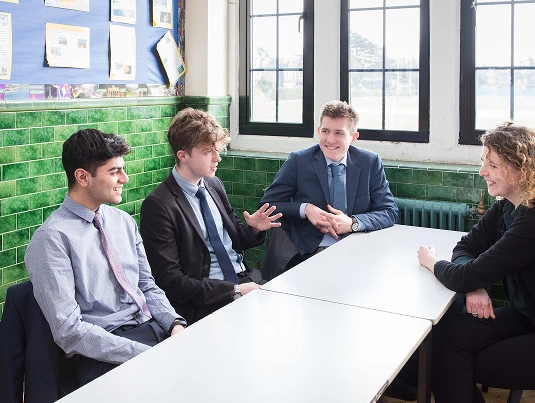
No two residential schools run an identical timetable, and any school claiming an identical universal boarding school routine is oversimplifying. What most well-structured boarding schools share is a similar underlying shape to the boarding school daily routine.
Early morning routine
A boarding school day typically opens with a structured early morning routine: a wake-up call, personal hygiene and dorm preparation, followed by some form of physical activity, whether that is yoga, sport or a supervised morning routine designed to set the tone for the day. The best early morning habits at any residential school are less about rigid discipline and more about building consistency, since a predictable early morning routine for students is one of the more reliable ways a school supports a child's wellbeing without saying so directly.
Classroom learning
The middle of the day follows the same academic structure any strong school would run: classroom learning across core and specialist subjects, taught by subject teachers rather than generalists, with the same rigour a day student would experience.
Afternoon and co-curricular time
Afternoons typically shift toward co-curricular activities: sport, music, drama, robotics, coding or debate, depending on the school's programme. This is not filler time. A genuinely rounded residential education treats this time with the same seriousness as the classroom, because it is where much of a student's confidence, teamwork and self-expression develops.
Evening prep and study
Most residential schools build in a supervised evening study period, sometimes called prep, where students consolidate the day's learning with academic support on hand. This is one of the clearer practical advantages boarding offers: consistent, supervised study time that does not depend on a parent's evening schedule.
Dinner and community life
Shared mealtimes and informal evening time matter more than they might first appear. This is where a boarding community becomes a community: the ordinary business of eating, talking and unwinding together, rather than any single programme or activity.
Wind-down and bedtime
A structured wind-down routine, supervised by house staff, closes the day. Reading, reflection and a consistent bedtime are part of what makes boarding schools genuinely supportive of a child's overall wellbeing, well beyond simply providing somewhere to sleep.

Weekends look different from weekdays but are rarely unstructured. Sports fixtures, hobby clubs, community service and free time all typically feature, alongside the kind of unstructured downtime that day school students get every evening but boarding students have to build into the week deliberately.
Not every family wants or needs the same level of residential commitment. This is why day boarding, weekly boarding and full boarding exist as genuinely distinct options, each suited to a different family circumstance.
Some schools in the wider market also advertise a hybrid arrangement, sometimes called flexi boarding, sitting somewhere between weekly and full boarding. Families should always confirm directly with a school which of these models it actually offers, since the terminology is not used consistently across the sector.
It is worth knowing that full boarding is not typically available from a school's youngest year groups. At Queen Elizabeth's School, Gurugram, for example, full boarding is available from Grade 3 (Year 4) onwards, in line with what most reputable British boarding schools in India consider appropriate for the level of independence full residential life requires.

What a student does beyond the timetable is often what they remember most. The co-curricular activities in boarding school life: sport, music, drama, robotics, coding, debate and community service are treated as central, not peripheral, in a well-structured residential school, because this is where much of what makes holistic education in boarding schools genuinely holistic actually happens. This is one of the clearer differences between top residential schools in India and a school that treats extracurricular time as an afterthought.
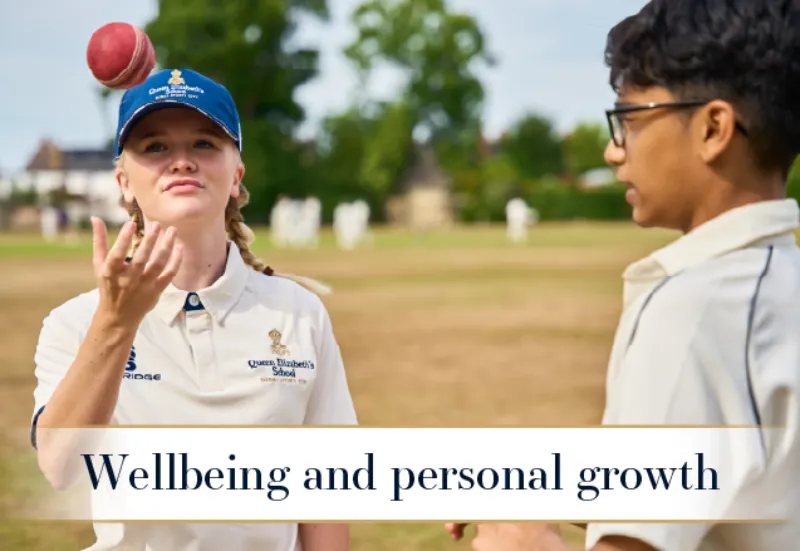
A predictable routine does more for a child's wellbeing than most parents expect. Balanced meals, consistent sleep, built-in physical activity and structured pastoral supervision through House Parents or pastoral staff all work together quietly, functioning as genuine wellbeing support even when it is not described that way.
A few myths persist well past their expiry date:
This is ultimately a fit question, not a ranking question. Questions worth considering honestly:
Key Takeaways
Help others discover this content
A typical day includes a structured early morning routine, classroom learning through the school day, co-curricular activities in the afternoon, supervised evening study, a shared evening meal, and a consistent wind-down and bedtime routine, all supervised by house staff.
Day boarding extends the school day into the evening with students returning home nightly. Weekly boarding has students on campus Monday to Friday, returning home at weekends. Full boarding is a complete residential arrangement covering weekdays and weekends, including all meals and pastoral care.
This varies by school. At Queen Elizabeth's School, Gurugram, full boarding is available from Grade 3 (Year 4) onwards, while day and weekly boarding follow the standard year group entry ages.
Generally, no. Modern residential schools build in regular family contact, treat structure as support rather than control, and dedicate significant time to co-curricular life rather than academics alone.
Queen Elizabeth's School, Gurugram structures boarding around three options and a shared pastoral framework:
Discover more insights and stories from Queen Elizabeth's School
 education continuity
Moving to a new country as an expat family is both exciting and daunting. There is the anticipation of new experiences, cultures, and opportunities, but also the reality of leaving behind familiar routines, friendships, and support networks.
Dr Craig Cook July 27, 2026
 academic excellence
Parents today are preparing children for a future shaped by global mobility, technological advancement, and evolving career opportunities. As a result, many families are reassessing what they want from a school and looking beyond traditional academic models.
Dr Craig Cook July 23, 2026  student campus life
Ask a student what their house means to them and the answer is rarely about points or trophies.
More often, it is about friendship, identity, encouragement, and being part of a community.
Dr Craig Cook July 22, 2026