


- University & Career Readiness
The Rise of Experiential Learning in Indian Schools: What It Means for Parents
 Dr Craig Cook
 August 27, 2026
 8 min read
Share this article
Help others discover this content


Table of Contents
Key Takeaways
- Experiential learning in schools means learning by doing: activity-based, project-based and problem-based learning rather than memorisation alone
- Parents are increasingly looking beyond examination results toward curiosity, adaptability and critical thinking
- Genuine experiential learning is embedded in everyday classroom culture, not confined to occasional activities or annual exhibitions
- Cognitive growth and social interaction develop alongside academic knowledge when learning is genuinely activity-based
- The clearest way to identify genuine experiential learning is to observe a normal school day, not an open day
Introduction
Education in India is changing. While academic excellence continues to matter, parents today are increasingly looking beyond examination results, seeking an education that equips their children with relevant 21st– century skills. They want schools that nurture curiosity, encourage creativity, build confidence and prepare children for a rapidly evolving world. This shift has brought experiential learning in schools to the forefront of modern education.
Unlike traditional teaching methods that often rely on memorisation, experiential learning for students focuses on learning by doing. Whether through activity-based learning, project-based learning, problem-based learning, collaborative projects, scientific investigations or real-world experiences, children develop a deeper understanding of concepts while building essential life skills.
As industries continue to evolve and employers increasingly value adaptability, innovation and critical thinking, schools are embracing student-centred learning and learner-centred education to prepare children for the future. But what exactly is experiential learning, and how can parents identify schools that genuinely practise it rather than simply using it as a marketing term?
What are experiential learning schools?
Experiential learning schools create opportunities for children to actively participate in personalised learning processes rather than passively receiving information. Instead of focusing solely on textbooks, students explore ideas through investigation, collaboration, experimentation and reflection.
An experiential curriculum encourages children to ask questions, solve problems and connect classroom concepts with everyday life. For example, rather than simply reading about environmental conservation, students may conduct biodiversity surveys, create sustainability campaigns or participate in outdoor learning activities that demonstrate environmental responsibility first-hand.
This learner-centred approach transforms students from passive listeners into active participants. Teachers become facilitators who guide discovery, encourage inquiry and create opportunities for meaningful learning experiences.
As a result, modern student-centred teaching methods help children understand not just what to learn, but how to think independently and apply knowledge confidently.
Why experiential learning is gaining momentum in India
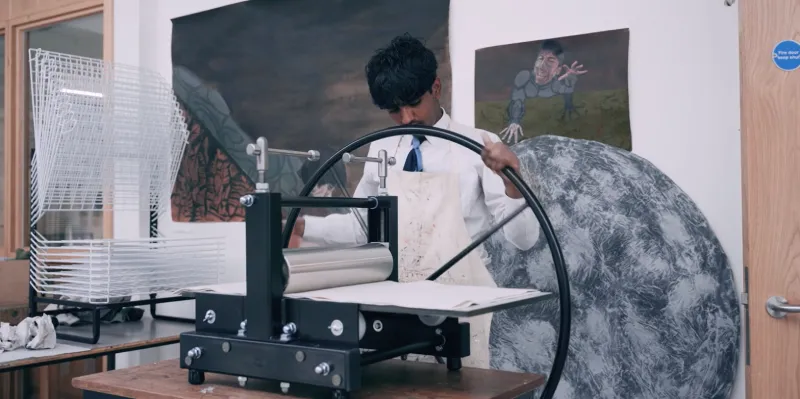
The demands of the twenty-first century are very different from those of previous generations. Today's children will enter careers that require continuous learning, collaboration and innovation. The nature of many jobs is continuing to evolve, making adaptability one of the most valuable skills children can develop.
This changing landscape has increased the demand for future-ready education in India, where schools focus on both academic achievement and practical capability.
Modern educational approaches such as activity-based education, inquiry-based learning, question-based learning, discovery learning and project-based learning programmes encourage students to engage deeply with concepts instead of memorising information for examinations.
Rather than asking children to simply remember facts, teachers encourage them to investigate questions, analyse evidence, debate ideas and develop solutions to authentic problems. These real-world learning experiences in schools make learning more meaningful while increasing motivation and engagement.
Parents are increasingly recognising that success is no longer determined solely by examination scores. The ability to communicate effectively, collaborate with others, solve complex problems and think creatively has become equally important. Developing these 21st-century skills in students also requires teachers who can facilitate this kind of learning rather than simply deliver content.
From rote learning to meaningful learning
For decades, many classrooms followed a teacher-led model where success depended largely on repetition and memorisation. While foundational knowledge remains essential, rote learning alone cannot develop the skills children need to thrive in today's world.
Experiential learning complements academic instruction by helping students understand the practical application of knowledge, bridging theory and practice rather than keeping them separate.
Consider a mathematics lesson. Instead of memorising formulas in isolation, students may complete project-based maths activities involving budgeting, architecture or data analysis. Similarly, project-based science activities allow learners to investigate scientific principles through experiments rather than simply reading about them.
This approach encourages active participation, strengthens conceptual understanding and improves long-term retention.
Children can develop a stronger understanding of concepts when they experience them, discuss them and apply them in different contexts.
Skills children develop through experiential learning
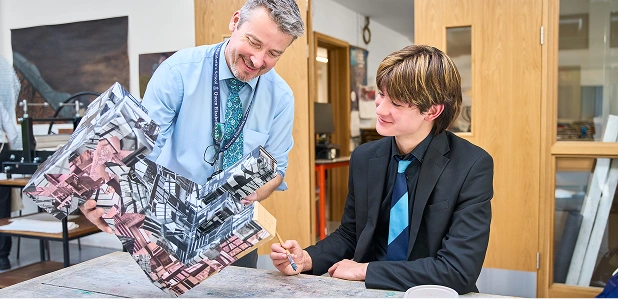
One of the greatest strengths of experiential learning in schools is its ability to support holistic development. Alongside academic knowledge, children gradually develop the personal and professional capabilities that universities and employers increasingly value, including broader cognitive development that extends beyond individual subjects.
Critical thinking and problem-solving
Rather than searching for one correct answer, students learn to evaluate information, analyse different perspectives and develop evidence-based solutions. Activities involving problem-based learning, STEM projects and STEM experiments naturally strengthen analytical thinking.
Communication and collaboration
Many experiential activities involve teamwork, presentations and peer discussions. Through collaborative learning and genuine social interaction, students improve communication skills while learning to listen respectfully, negotiate ideas and contribute effectively within a team.
Creativity and innovation
Open-ended projects encourage children to explore multiple solutions rather than following predetermined methods. This develops creativity, innovation and confidence in generating new ideas.
Leadership and decision-making
Student-led initiatives, peer teaching opportunities and collaborative projects encourage children to take responsibility, make informed decisions and gradually acquire leadership qualities.
These experiences help students become independent learners who feel confident navigating unfamiliar situations.
Beyond academics: preparing children for the future
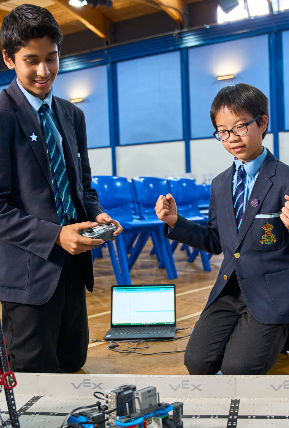
Education today extends far beyond examination performance. Schools are increasingly expected to prepare students for higher education, evolving careers and responsible citizenship.
Through hands-on and practical learning experiences, as well as authentic challenges, children develop adaptability, resilience and confidence –qualities that contribute significantly to career readiness.
Equally important, experiential learning nurtures ethical awareness, social responsibility and empathy. Whether participating in community initiatives, environmental projects or collaborative classroom activities, students learn the importance of contributing positively to society.
This combination of academic excellence and character development creates well-rounded learners who are prepared not only for examinations, but also for life.
Why parents should look beyond marketing claims
As experiential learning schools in India become increasingly popular, many institutions use the terminology without fully embracing the philosophy.
Genuine experiential learning goes beyond occasional activities or annual exhibitions. It should be embedded within the school's everyday learning approach, curriculum planning and classroom culture.
When visiting a prospective school, parents should observe whether students actively participate in discussions, collaborate on projects and engage confidently with teachers. A truly learner-centred classroom encourages questioning, exploration and independent thinking rather than passive note-taking.
What should parents look for when choosing an experiential learning school?
Choosing the right school in India involves much more than comparing examination results or infrastructure. Parents should evaluate whether the school's philosophy genuinely supports experiential learning in schools and promotes student-centred learning every day.
Here are some key aspects to consider:
1. A learner-centred curriculum
An effective learner-centred curriculum places the child at the heart of the learning process. Lessons should encourage students to question, investigate, reflect and apply their understanding rather than simply memorise information.
Look for evidence of learner-centred education, activity-based learning, problem-based learning, question-based learning and discovery learning across subjects.
2. Project-based and inquiry-driven learning
Ask how often students participate in project-based learning activities or inquiry-based learning activities. Genuine project-based learning in K-12 education encourages children to research real-world problems, collaborate with classmates and present their findings confidently.
Whether through project-based science learning , project-based maths activities or interdisciplinary STEM projects, these experiences help students connect classroom concepts with practical applications.
3. Flexible learning environments
Modern schools recognise that learning extends beyond traditional classrooms. Look for:
- Spacious, tech-enabled classrooms
- Science and STEM facilities
- Libraries and dedicated project spaces
- Performance and visual arts studios
- Outdoor method based learning zones and play areas
- Technology that enhances interactive classroom learning
These environments support hands-on learning in schools, encourage exploration and inspire creativity.
4. Teacher-student interaction
One of the clearest indicators of student-centred teaching methods is how teachers interact with learners.
Observe whether teachers:
- Encourage questions
- Facilitate discussions
- Guide rather than lecture
- Promote collaborative learning
- Support personalised learning
- Celebrate curiosity and independent thinking
A positive classroom culture helps children become confident learners who actively participate in their education.
Can experiential learning improve academic performance?
A common misconception is that experiential learning comes at the expense of academic rigour. In reality, the opposite is often true.
When children understand concepts through practical learning experiences and the real-world application of knowledge, they develop a deeper conceptual understanding that improves retention and recall.
Instead of memorising isolated facts, students learn how ideas connect across subjects. This strengthens conceptual clarity while making learning more engaging.
Benefits include:
- Increased learner motivation and engagement
- Improved retention and transfer of knowledge
- Deeper conceptual understanding
- Stronger critical thinking
- Better communication skills
- Greater confidence
- Enhanced decision-making skills
- Improved teamwork and collaboration
By combining academic knowledge with practical application, experiential learning can support academic performance while preparing students for both examinations and lifelong success.
How Queen Elizabeth's School, Gurugram promotes experiential learning
At Queen Elizabeth's School, Gurugram, learning is designed to inspire curiosity, confidence and lifelong achievement.
The school's educational philosophy combines the Cambridge International Curriculum, delivered within a British educational tradition, with an engaging learning approach that encourages children to think independently, collaborate effectively and apply knowledge in meaningful ways.
Students benefit from:
- The Cambridge International Curriculum, promoting 21st-century learning skills within a structured academic framework
- Activity-based learning and collaborative classroom experiences
- STEM projects and innovation-focused learning, supported by a dedicated STEM Lab
- Technology-enabled classrooms and specialist learning spaces
- A Composite Science Lab for hands-on enquiry across Physics, Chemistry and Biology
- Creative arts, music and co-curricular learning opportunities through QE Flourish
- Opportunities for leadership, teamwork and communication
- Outdoor learning experiences that support holistic development
Rather than viewing learning as the completion of textbook chapters, students are encouraged to investigate, experiment, create and reflect. This balanced approach helps nurture critical thinking, adaptability, ethical awareness and resilience while maintaining high academic standards.
By integrating experiential learning into everyday classroom practice, Queen Elizabeth's School, Gurugram prepares students not only for examinations but also for higher education, future careers and responsible global citizenship.
Preparing children for a rapidly changing future
The future demands far more than academic knowledge alone.
Children will need to solve unfamiliar problems, adapt to changing technologies, communicate across cultures and collaborate with diverse teams. These are precisely the capabilities developed through experiential teaching, collaborative learning and learning by doing.
Parents choosing schools today are making decisions that will shape their child's future for decades to come.
By selecting a school that embraces future-ready education in India, families can help children become confident, compassionate and capable learners who are prepared to thrive in an increasingly complex world.
Final thoughts
The rise of experiential learning in Indian schools reflects a broader understanding of what meaningful education should achieve. While academic excellence remains essential, children also need opportunities to explore, question, create and apply their knowledge in authentic contexts.
The best experiential learning schools combine strong academics with activity-based learning, student-centred learning, project-based learning, hands-on learning and an inclusive school culture that nurtures curiosity and confidence.
As parents evaluate schools, it is worth looking beyond marketing claims and asking how learning happens every day. A learner-centred approach equips children with the 21st-century skills that matter for their future: critical thinking, creativity, communication, collaboration, adaptability and leadership.
At Queen Elizabeth's School, Gurugram, these principles are woven into the learning experience, helping every child grow into a confident, compassionate and future-ready individual.
Key Takeaways
- Experiential learning in schools means learning by doing: activity-based, project-based and problem-based learning rather than memorisation alone
- Parents are increasingly looking beyond examination results toward curiosity, adaptability and critical thinking
- Genuine experiential learning is embedded in everyday classroom culture, not confined to occasional activities or annual exhibitions
- Cognitive growth and social interaction develop alongside academic knowledge when learning is genuinely activity-based
- The clearest way to identify genuine experiential learning is to observe a normal school day, not an open day
Share this article
Help others discover this content
Tags
FAQs
What are experiential learning schools?
Experiential learning schools focus on learning by doing. Students learn through activity-based learning activities, projects, inquiry, collaboration and real-world experiences rather than relying solely on textbooks and memorisation. Types of experiential learning can include project work, experiments, outdoor experiences, creative activities, fieldwork and collaborative problem-solving.
What is project-based learning and how does it benefit students?
Project-based learning allows students to explore a question, challenge or topic through an extended practical task. Project-based learning encourage students to research, collaborate, solve problems and apply their knowledge rather than simply recall information. For younger learners, project-based learning activities can be designed around age-appropriate questions, investigations and hands-on tasks.
What is learner-centred classroom?
Learner centred classroom place students actively at the heart of the learning process. Rather than relying solely on teacher-led instruction, a learner centred approach encourages students to ask questions, explore ideas, collaborate and take greater ownership of their learning. This can create a learner centred classroom where teachers guide and support students while allowing them to engage meaningfully with concepts.
What is a learner-centred curriculum?
A learner-centred curriculum is designed around how students learn, explore and apply knowledge. It can incorporate inquiry, collaboration, practical activities, projects and opportunities for students to develop their interests and strengths. This approach supports a student-centred learning classroom where students are active participants rather than passive recipients of information.
How does activity-based learning support children's development?
Activity-based learning activities give students opportunities to explore concepts through practical experiences, collaboration and problem-solving. The approach can be adapted to different ages. For younger children, activity-based learning in the early years may involve play, exploration, creative tasks and simple investigations, while older students may engage in more complex projects, experiments and real-world applications.
What are competency-based learning activities?
Competency-based learning activities focus on what students can understand, apply and demonstrate rather than simply what they can remember. They can involve problem-solving, communication, collaboration, critical thinking and practical application. This allows students to develop skills alongside their subject knowledge.
How does inquiry-based learning work in the classroom?
Inquiry in the classroom begins with questions, observations or problems that encourage students to investigate and develop their own understanding. Through inquiry-based learning, students can research, test ideas, discuss evidence and reflect on what they discover. Problem-based learning can similarly place a real or meaningful problem at the centre of the learning process, encouraging students to think critically and develop possible solutions.
What role do field trips and outdoor learning play in experiential education?
Field trips and outdoor learning give students opportunities to connect classroom concepts with the world around them. These experiences can encourage observation, exploration, collaboration and practical application. They are one-way experiential education can move learning beyond the traditional classroom and create more memorable learning experiences.
What technology can support experiential learning?
Technology can create additional opportunities for students to explore, experiment and interact with concepts. Facilities such as an AR/VR Lab can provide immersive experiences, while technology-enabled classrooms can support research, collaboration and creative projects. Technology is most effective when it supports meaningful learning rather than becoming the focus of the lesson itself.
How does experiential learning support holistic education in India?
Holistic education in India can bring together academic learning with creativity, collaboration, physical development, leadership and personal growth. Experiential learning supports this broader approach by giving students opportunities to apply knowledge, develop practical skills and learn through meaningful experiences.
Can experiential learning improve academic performance and career readiness?
Yes. Experiential learning can help students develop deeper conceptual understanding alongside critical thinking, communication, teamwork, creativity and problem-solving. These capabilities can support academic performance while also helping students develop skills relevant to higher education and future careers.
How does Queen Elizabeth's School, Gurugram promote experiential learning?
Queen Elizabeth's School, Gurugram integrates activity-based learning, STEM projects, collaborative learning, a Composite Science Lab and STEM Lab, technology-enabled classrooms, creative arts and leadership opportunities through QE Flourish to create engaging and meaningful learning experiences.
Which is better: experiential learning or rote learning?
Both knowledge acquisition and practical application have a role in education. Experiential learning complements foundational knowledge by giving students opportunities to explore concepts, apply what they have learned and understand how ideas work in real-world contexts. The emphasis is on developing understanding rather than relying solely on memorisation.
Is experiential learning suitable for all age groups?
Yes. Experiential learning can be adapted to different stages of education. For younger children, this may include play, exploration and activity-based learning in the early years. As students progress, they can engage in project-based learning , inquiry, experiments, field trips, collaborative projects and more complex real-world applications.
How can parents identify whether a school genuinely offers experiential learning?
Parents can look beyond claims in a prospectus and ask how learning actually takes place in the classroom. Look for evidence of learner-centred teaching, project work, inquiry, practical activities, collaborative learning, specialist facilities and opportunities for students to apply their knowledge. Observing a learner centred classroom or asking to see examples of student projects can also help parents understand the school's approach.
Can experiential learning be combined with the Cambridge curriculum?
Yes. Experiential learning is a teaching approach rather than a curriculum, so it can be incorporated into different curricula. A learner-centred curriculum can use projects, inquiry, practical activities and real-world experiences to help students engage more deeply with subject content. At Queen Elizabeth's School, Gurugram, these approaches can be integrated within the Cambridge International Curriculum.
You May Also Explore Our Other Blog Posts
Discover more insights and stories from Queen Elizabeth's School
 boarding school experience
Student Life in an Indian Boarding School: Daily Routine and Beyond
Ask a parent who has never considered boarding what comes to mind, and the answers are often decades out of date: strict discipline, cold dormitories, a child sent away. Ask a parent who has actually researched the best boarding schools in India today, and the picture looks nothing like that.
Dr Craig Cook August 20, 2026
 5 min read
 education continuity
Settling in India as an expat family: A parent's perspective
Moving to a new country as an expat family is both exciting and daunting. There is the anticipation of new experiences, cultures, and opportunities, but also the reality of leaving behind familiar routines, friendships, and support networks.
Dr Craig Cook July 27, 2026 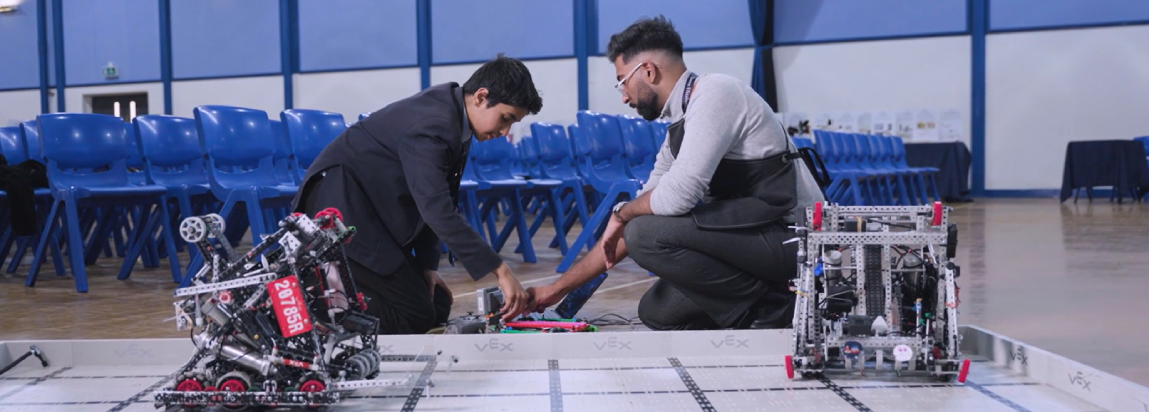 academic excellence
Why parents are shifting to British curriculum schools in 2026
Parents today are preparing children for a future shaped by global mobility, technological advancement, and evolving career opportunities. As a result, many families are reassessing what they want from a school and looking beyond traditional academic models.
Dr Craig Cook July 23, 2026